

Defining the Gray Area
When people hear “Constructivism,” they often think of old posters.
Red shapes.
Diagonal lines.
Bold letters.
That is the outside.
But underneath, it was something very simple.
It was about purpose.
Not decoration.
Not noise.
Not spectacle.
Purpose.
This post did not start from theory. It started from a conversation.
A friend said art should shatter the status quo. That without substance, it becomes a cash grab. That maybe we are afraid to go deep because we do not want to become “not interesting.”
That stayed with me.
Because I do not crave to be interesting for its own sake. I do not need to shatter everything. I do not need to impress. I like to listen.
In a loud world, listening can look like silence.
But it is not empty.
It is construction.
The gray area is where that construction happens.
Not on the extreme edge.
Not in the performance.
Not in the “look at me.”
In the middle, where intention is still forming.
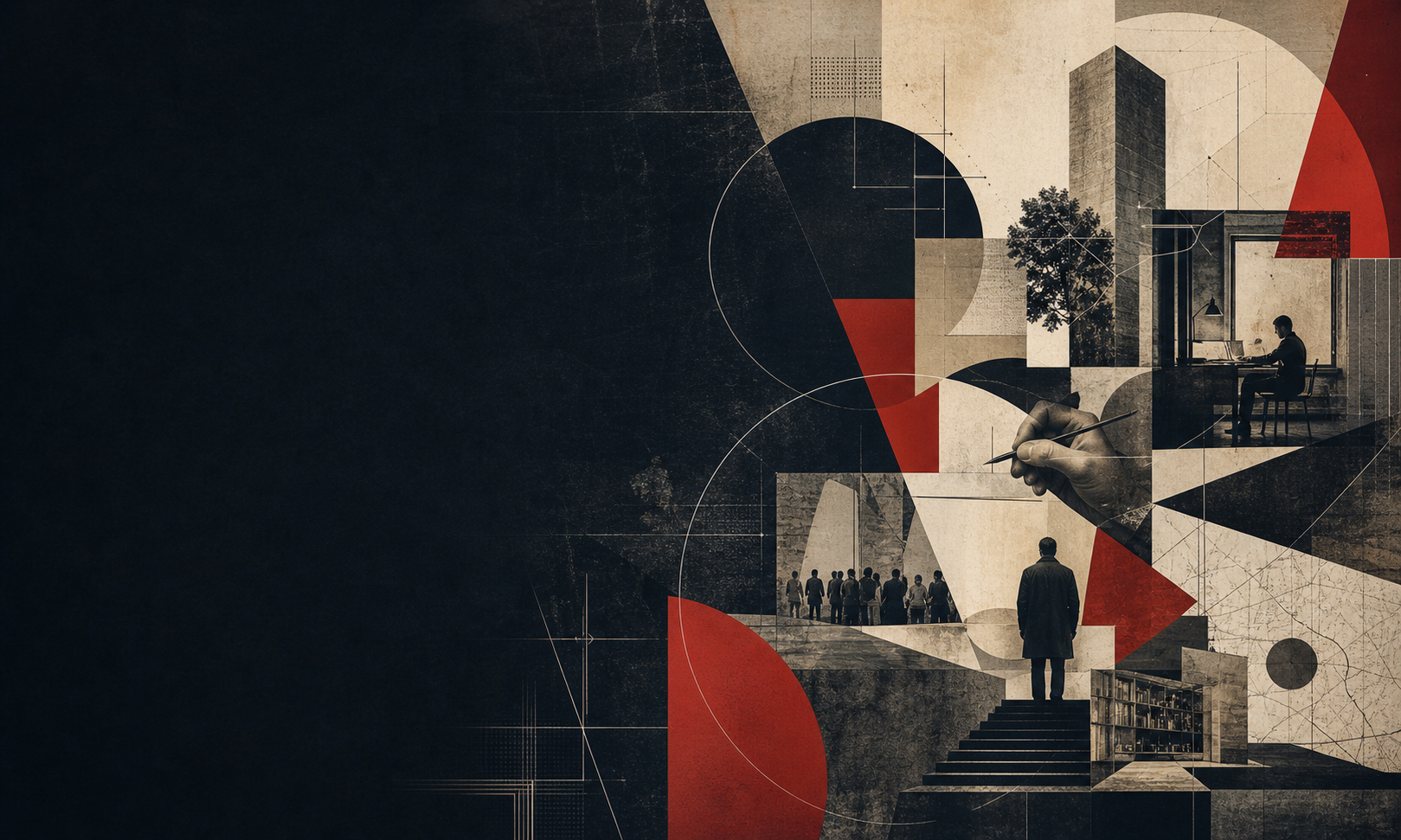
The featured image reflects that space.
The message is visible.
The face is hidden.
The drawing is graphite, not ink.
Not finished.
Not erased.
Reflective and human.
That is the gray area.
People perform because they want to matter. Sometimes because they feel erased.
I understand that all too well.
But I do not build to stand above someone. I build to connect. And connection does not always look dramatic.
Sometimes it looks like restraint.
Sometimes it looks like waiting.
Sometimes it looks like speaking only when the structure is clear.
That is what this post is about.
Not being loud.
Not being disruptive for the sake of disruption.
But being intentional.
We are all a little constructivist when we choose purpose over performance.
Even in conversation.
Especially in conversation.
Not for art’s sake alone.

