
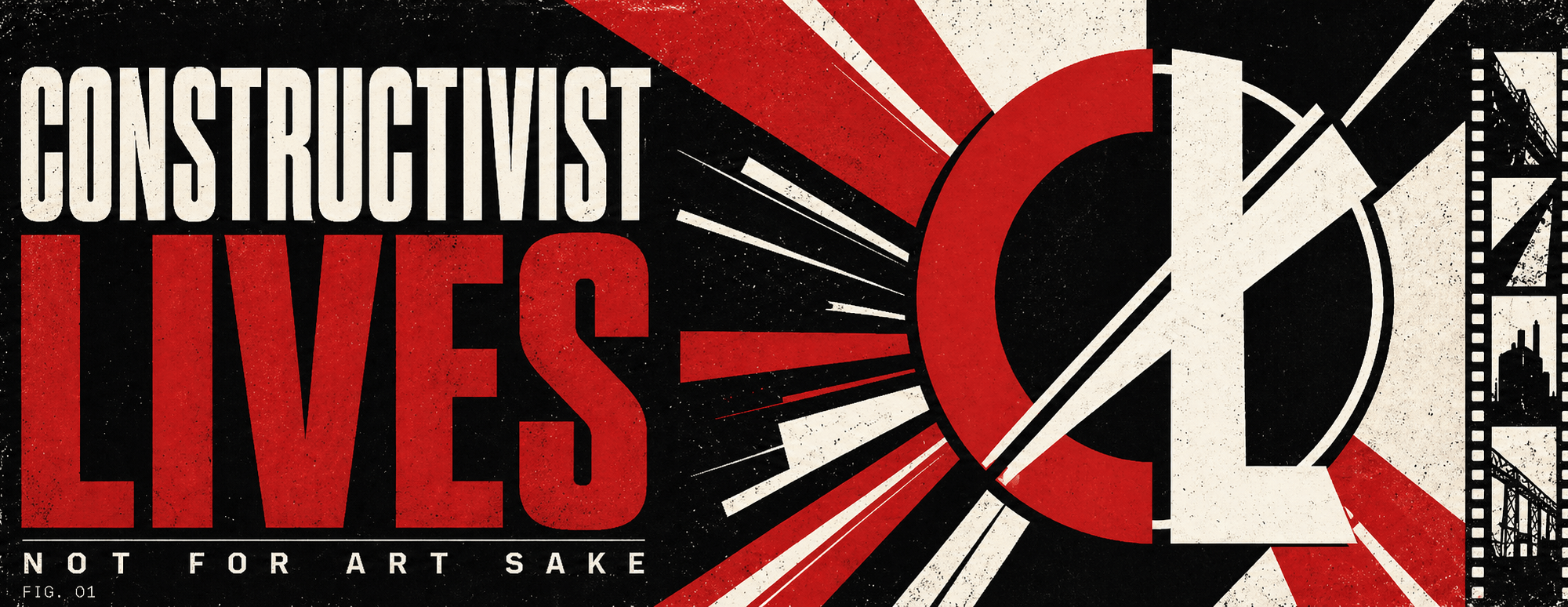
NOT FOR ART SAKE
Art that serves. Images that carry signal, memory, pressure, and meaning.
Constructivist Lives is a visual project rooted in my long relationship with digital collage, public language, poetry, memory, and constructed space.
The name is literal. “Constructivist” describes the visual language I use: structure, geometry, contrast, and clear intent. “Lives” is a noun, not a verb. It refers to real lives, lived experience, and the human meaning images can carry.
The work includes art, remixed ideas, printed objects, and visual experiments built around one belief: art should do something.
Sometimes that means carrying memory. Sometimes it means creating pressure, humor, recognition, or a reason to look again.
Where It Started
Constructivist Lives did not begin as a merch brand. It began years before it had a name, in my undergraduate work at WSU Vancouver, where Mona Lisa stepped out of her frame, Brautigan became an interactive poem, and design became more than decoration.
Around 2008–2010, while studying at Washington State University Vancouver, I was working through questions that still shape my practice today: What happens when an image leaves its original frame? How does meaning change when history, technology, poetry, and personal memory converge? Can digital tools turn familiar cultural content into something newly alive?
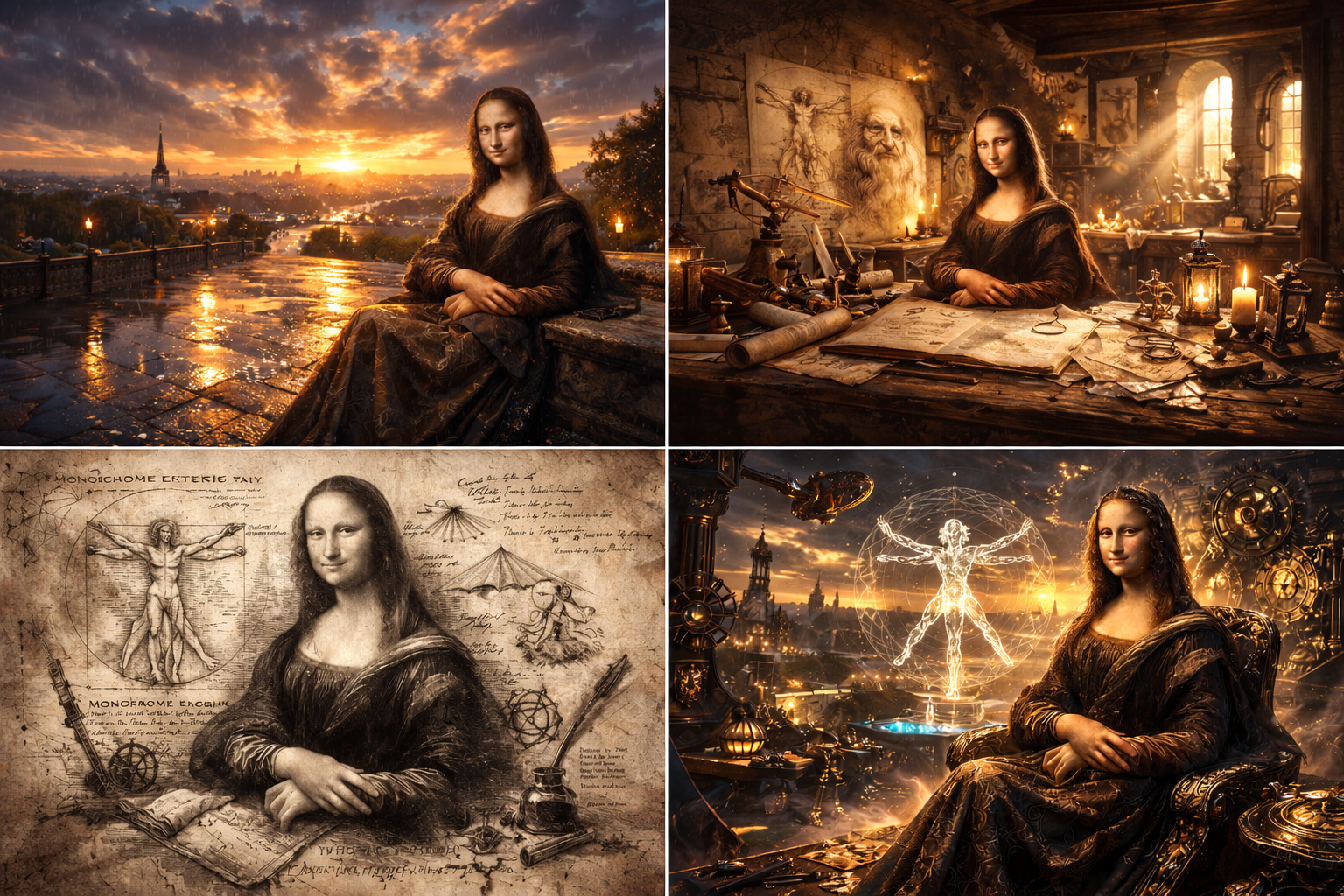
In that period, several pieces began to form the foundation for what would later become Constructivist Lives. One was La Gioconda Visiting Her Old Friend Leonardo, created in May 2010. In that work, Mona Lisa was no longer a museum object or a famous face trapped inside a frame. I imagined her as a visitor entering a constructed room, surrounded by light, memory, and fragments of Leonardo’s world.
Another root was The XXI Century Brautiganism: A Visual Poetry, a digital and multimedia project that reinterpreted Richard Brautigan’s poetry through video, sound, hyperlink structure, and public exhibition. That project asked how language could move through technology, how a poem could become an experience, and how viewers could build their own meaning through fragments.
Looking back, I can see the pattern clearly. I was already working with icons, words, repetition, constructed space, and public meaning. Constructivist Lives is the continuation of that work, sharpened into a visual language.
Three Early Roots
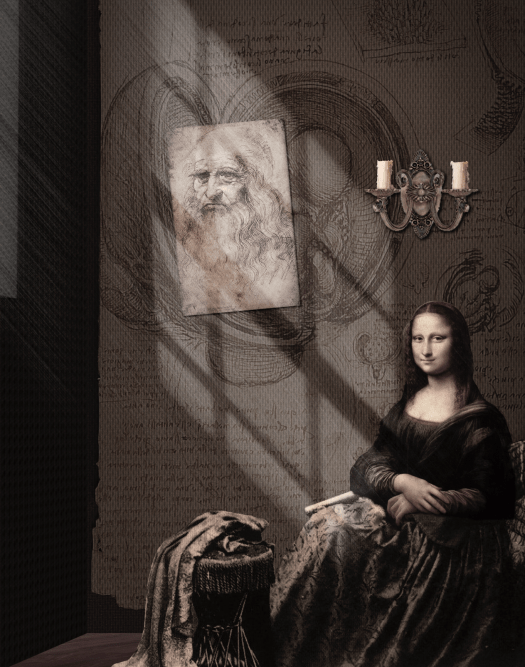
Mona Lisa Leaves the Frame
Created in 2010 at WSU Vancouver, this work became one of the earliest foundations of Constructivist Lives: a familiar icon moved into a new constructed space.
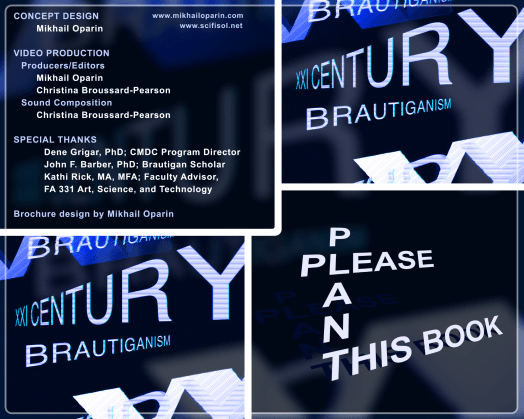
Poetry Becomes Experience
XXI Century Brautiganism explored poetry through video, sound, hyperlinks, and public installation. It was an early experiment in turning language into a participatory visual system.
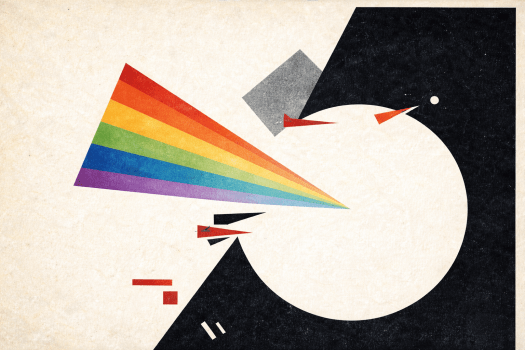
Signal Becomes Structure
The current Constructivist Lives identity brings those early questions into sharper focus: geometry, typography, motion, contrast, and meaning built for public life.
What Constructivist Lives Means Now
Constructivist Lives is my space for work that treats design as public language. Constructivism is not nostalgia for an old art movement. It is a stance. It asks a direct question: what is this work doing in the world?
If the answer is only decoration, I keep pushing.
The work uses familiar icons, hard geometry, controlled contrast, and type as structure. Some pieces are quiet. Some are blunt. Either way, the goal is the same: to create images that carry intent, invite recognition, and move beyond the screen.
How My Work Forms
Most pieces begin with a signal: a feeling, a memory, a visual fragment, a cultural reference, a phrase, or a tension I cannot leave alone.
From there, the signal becomes a story. I ask what the image is trying to hold: recognition, displacement, humor, grief, resistance, tenderness, or contradiction.
Then the story becomes an object: a poster, collage, garment, product, page, or visual system. Merch is not the end point. It is one way the signal travels.
Visual Language
For Collections, I use five buckets to organize the work. Each bucket answers one question about design intent.
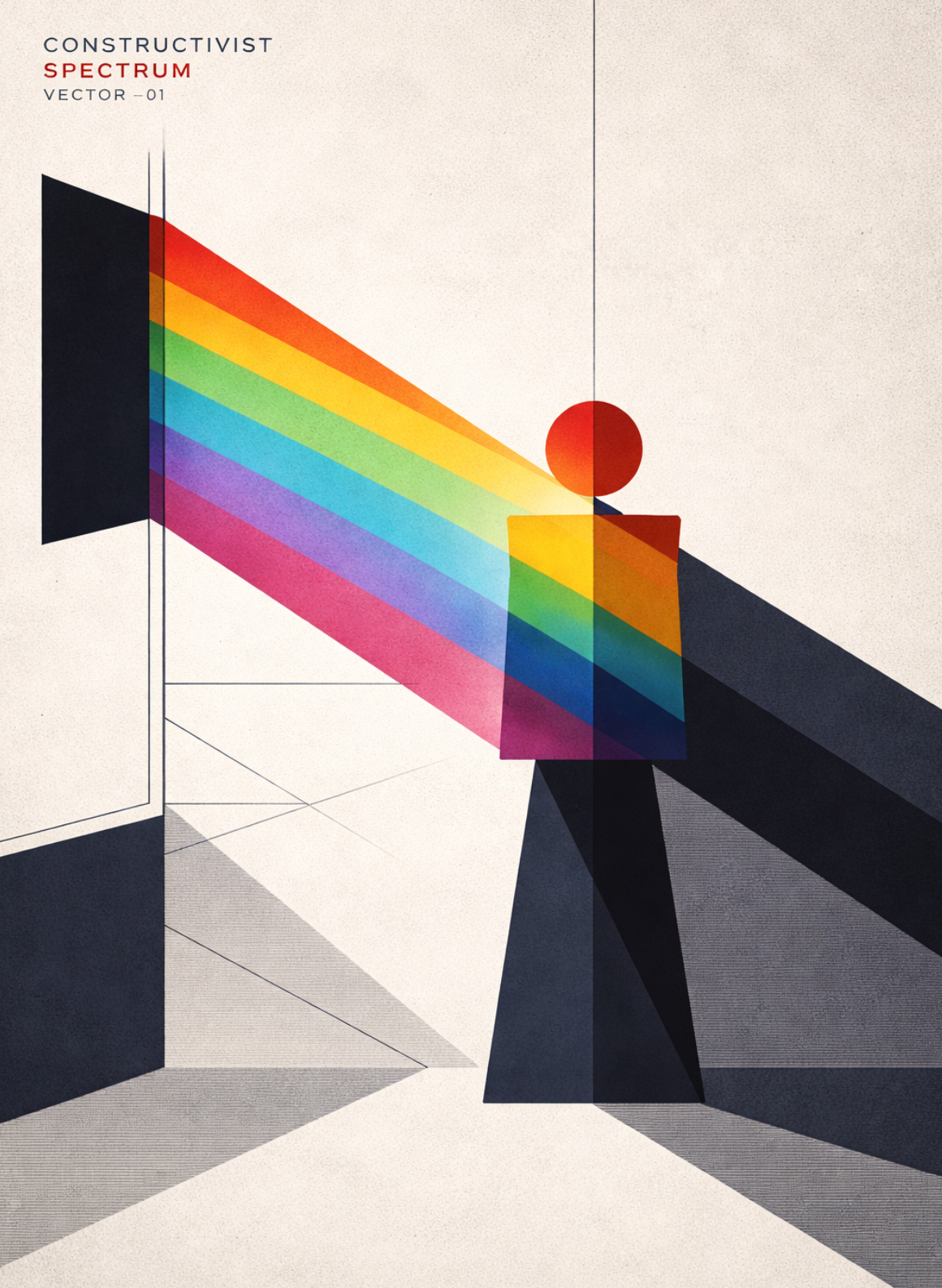
SIGNAL
A distilled message, reduced to form, contrast, and intent.
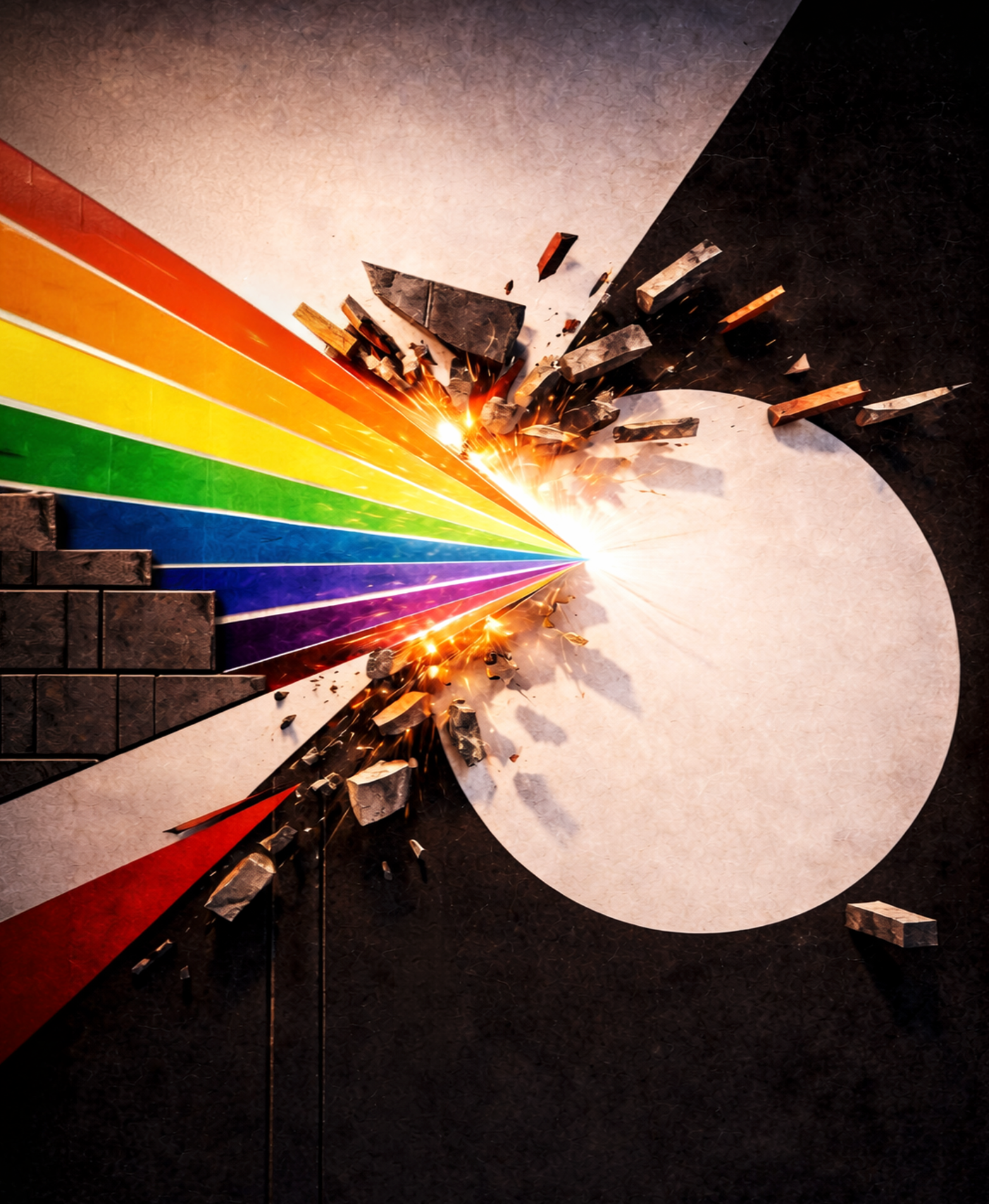
VECTOR
Direction and momentum. The design pushes the eye on purpose.
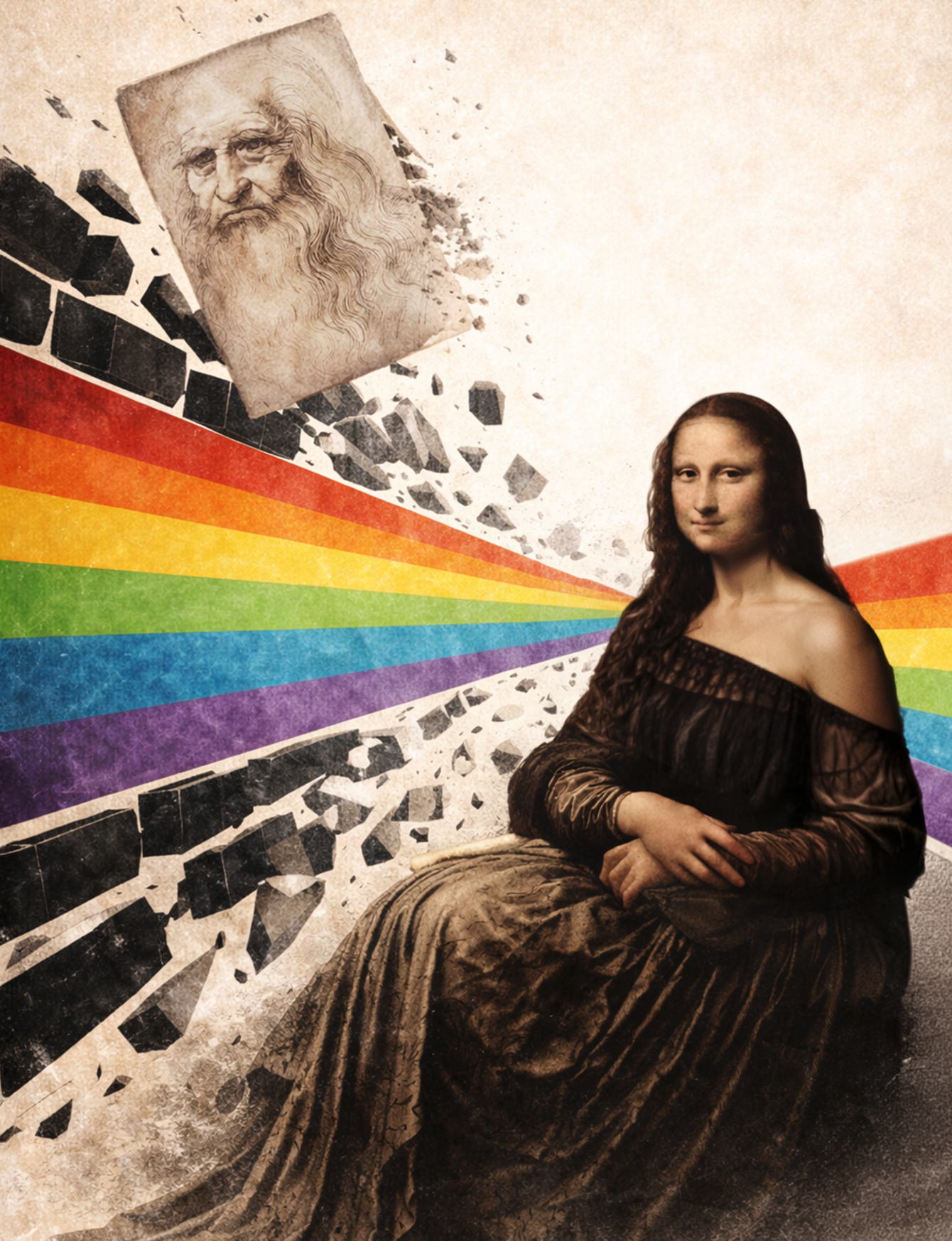
BETWEEN
Meaning made through connection. Past and present in the same frame.

TYPE ENGINE
Words doing real work. Text as structure, not decoration.
WORKSHOP
Process on display. Studies, tests, fragments, and visible making.
The Common Thread
The thread running through Constructivist Lives is not style alone. It is pressure, translation, and transformation.
A command becomes a question. A wedge becomes a force. A familiar icon becomes a visitor. A fragment of light becomes a structure for meaning.
That is the space this work lives in: between old and new, between image and signal, between memory and construction.
NOT FOR ART SAKE
Art can decorate, but it can also interrupt, question, and carry meaning. Constructivist Lives exists for that second purpose:
NOT FOR ART SAKE.
For signal.
For memory.
For meaning that moves.
Want to read more about the ideas and process behind the work?
Want to browse merch and live items by intent?

