

Background of the Specific Problem
The Love Has No Labels (LHNL) campaign was launched to challenge implicit bias and promote a more inclusive, accepting society. Its central message is that small, everyday actions can help create a sense of love and acceptance among diverse groups. According to the campaign’s mission, “We believe we all have the ability to create a more inclusive world. Learn about the small actions you can take every day to make others feel loved and accepted” (Ad Council, n.d.).
The 2015 launch featured a PSA (Public Service Announcement) where skeletons were depicted dancing, kissing, and embracing behind an X-ray screen. When these individuals stepped out from behind the screen, they revealed their diversity in race, religion, gender, and ability. As Cameron Keady from the Huffington Post explains, “The skeleton is used as a symbolic reminder that—simply put—we’re all human, despite our varying identities” (Keady, 2018).
Implicit bias, as described by the campaign, is often hidden in our subconscious, shaping our actions and interactions without us realizing it. The Love Has No Labels campaign directly addresses this by encouraging viewers to reflect on how implicit biases affect their everyday interactions. The initial PSA became one of the most-watched social media activism videos, reaching over 169 million views and winning an Emmy for Outstanding Commercial (Fisher, 2018).
Target Audience
The target audience for the Love Has No Labels campaign is broad and inclusive, spanning across diverse demographics in the United States. It aims to engage the general population with a focus on fostering awareness about implicit bias related to race, gender, sexual orientation, religion, and ability. The campaign’s goal is to shift public perceptions and encourage people to embrace and celebrate differences through the normalization of love and acceptance.
Formative Research
Though there is no publicly available formative research predating the campaign, the response to the PSA highlights the success of the campaign’s immersive approach. By using skeletons to mask identities, the PSA creates an impactful “aha moment” for the audience, showing that love transcends all labels.
Ipsos Public Affairs conducted a survey commissioned by the Ad Council that demonstrated increased public awareness about creating inclusive environments, jumping from 61% in March 2015 to 72% in June 2018 (Ad Council, n.d.). The campaign’s massive reach, backed by $88 million in donated media, further supports its effectiveness as a strategic communication initiative.
The campaign also provides downloadable resources, including scripts and activities, to help individuals and organizations create more inclusive environments and address implicit bias in a variety of settings. This reinforces the campaign’s focus on community activation through behavioral change communication strategies.
Community Engagement and Action
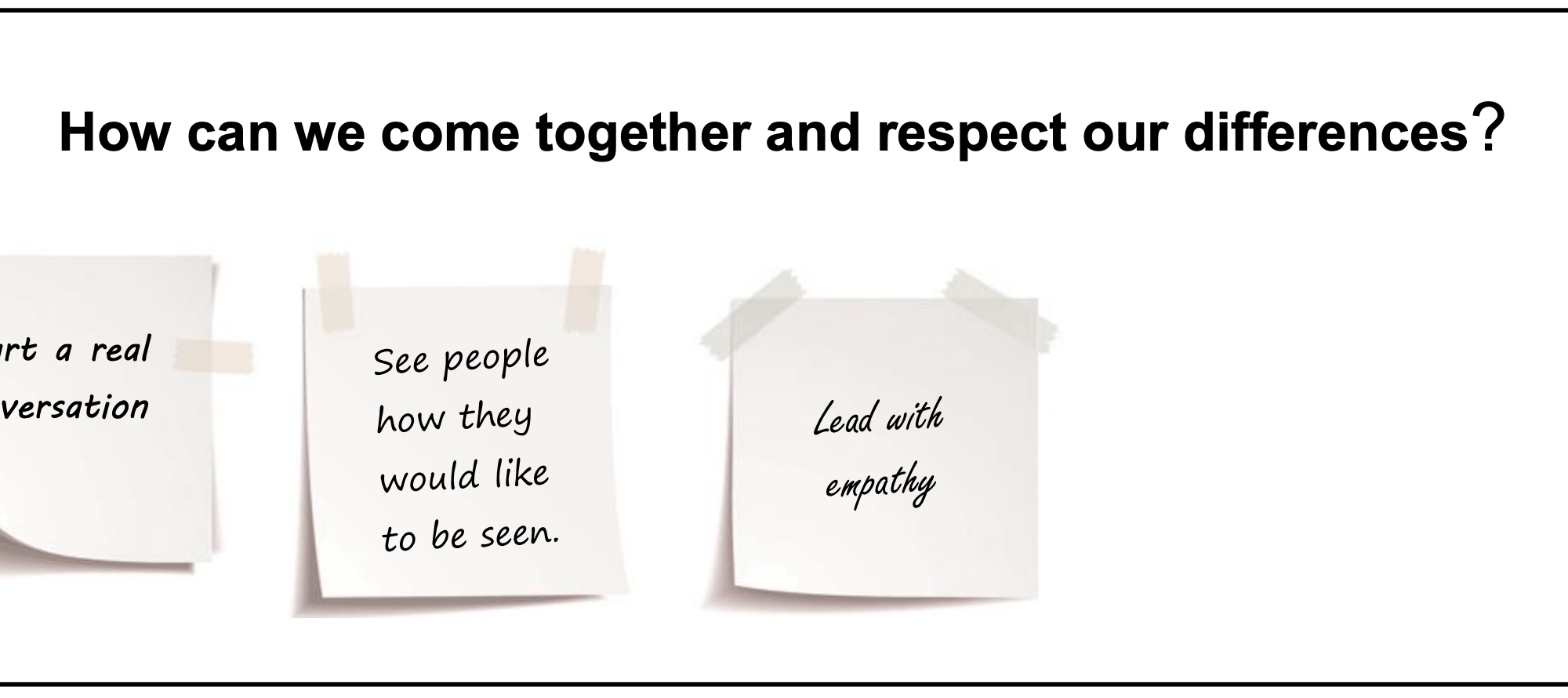
A key part of the campaign is its focus on community engagement. The Community Activation Kit encourages individuals, groups, and communities to discuss and act on bias. This resource helps people explore their own biases in a structured way, promoting understanding and empathy.
In addition, the campaign uses social media and digital toolkits to engage its audience in conversations about bias. The Actions to Take Online Kit provides tips for addressing bias in digital spaces, encouraging more positive and respectful communication. This demonstrates cross-cultural communication principles, which emphasize understanding and addressing cultural differences.
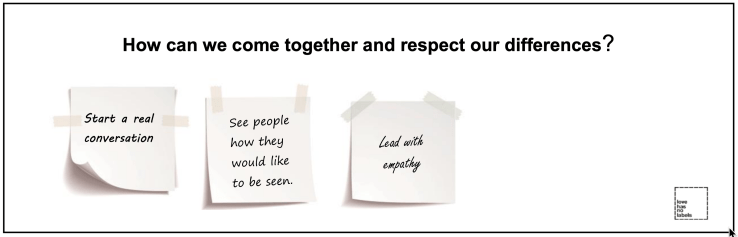
Sample Bulletin Board:
Media and Message Strategy
The campaign’s message is simple yet strong: “Before anything else, we’re all human” (Ad Council, n.d.). The PSA’s use of skeletons illustrates this point beautifully—beneath our differences, we all share the same humanity.
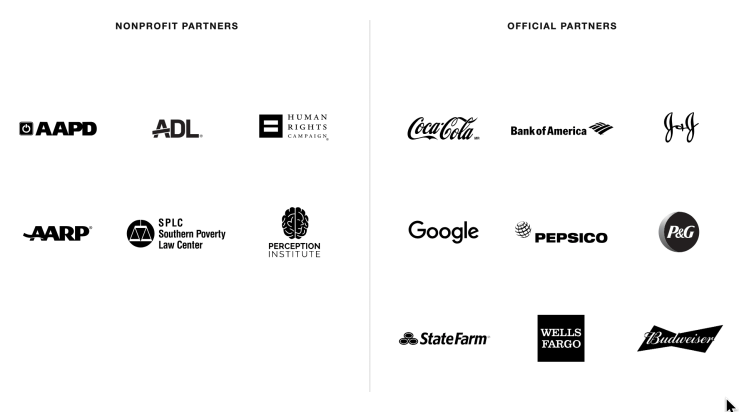
The campaign successfully uses different strategic communication tools, including social media platforms like Facebook, Instagram, and Twitter, to spread its message widely. Collaborating with major companies, nonprofits, and public figures like First Lady Michelle Obama further expanded the campaign’s reach (R/GA, 2019).
▶️ Watch YouTube Video:
Communication Theory: Cross-Cultural Communication
The Love Has No Labels campaign follows Cross-Cultural Communication Theory, which focuses on how to communicate effectively across different cultures. By asking people to reflect on their own biases, the campaign encourages dialogue that bridges cultural gaps.
It promotes strategic communication by not only raising awareness but also encouraging action through community engagement and thoughtful messaging. This approach helps change the way people view and interact with those who are different from them.
Conclusion and Campaign Evaluation
The Love Has No Labels campaign is a great example of how strategic communication can address important social issues and inspire change. With over 169 million views and an Emmy win, the campaign made people more aware of their biases and encouraged them to act more inclusively.
The success of the campaign can be measured by its widespread media coverage and social media engagement. It reached over two billion media impressions and received attention from outlets like ABC News, CNN, and The New York Times. Surveys also show a rise in inclusive behavior, proving the campaign’s effectiveness (Ad Council, n.d.).
By combining digital media, partnerships, and community resources, Love Has No Labels shows how a well-planned strategic communication campaign can make a lasting positive impact.
References
Ad Council. (n.d.). Love Has No Labels. https://lovehasnolabels.com/
Ad Council. (n.d.). Learn how to promote inclusion in your everyday life. https://lovehasnolabels.com/resources/
Communication Theory. (n.d.). Cross cultural communication. https://www.communicationtheory.org/cross-cultural-communication/
Fisher, E. (2018, November 13). Love Has No Labels premieres ‘Rising’ a powerful film from David Nutter and Lena Waithe that asks why it takes a disaster to bring us together. Ad Council. https://www.adcouncil.org/news-events/press-releases/love-has-no-labels-premieres-rising
Keady, C. (2018, March 4). Giant X-ray screen erases gender, age, race to prove ‘we are all human’. Huffington Post. https://www.huffpost.com/entry/psa-love-has-no-labels-skeletons_n_6801038
R/GA. (2019). Case study: Love Has No Labels. R/GA Transformation at Speed. https://www.rga.com/work/case-studies/love-labels
 Mikhail Oparin
Thank you for writing this. I am actually a college student and am using your article for my paper. (:
LikeLike