

Music, memory, and the places we carry with us
Every immigrant eventually discovers something unexpected. The past does not disappear when you move to a new country. It simply becomes something you live with. A core memory that continues to shape your motives and quietly influence your future. A form that is invisible, yet so clearly reflected in the mind that when you touch it emotionally, it can take your breath away.
Sometimes it returns through language. Sometimes through food, a smell, or a familiar winter sky. A familiar voice. An old letter. A sound you have not heard in years. Even an old YouTube video. And often it arrives through music, a song that connects your thoughts and feelings to something very close to your heart.
For me, one of those moments arrives every time I hear “Gorod Kotorogo Net” by Igor Kornelyuk, written as the theme for the television series Bandit Petersburg.
The haunting song accompanies a Russian crime drama that follows journalists, police, and criminals navigating the chaotic and often corrupt reality of St. Petersburg during the turbulent 1990s. The collapse of the Soviet system left a vacuum quickly filled by organized crime, political intrigue, and moral ambiguity.
Beneath the crime story lies a deeper theme. The sense that the old world had vanished and been replaced by something uncertain and harsher. In that context, the city that doesn’t exist becomes a metaphor for a lost place of memory. An idealized past. A version of society people feel disappeared during the transition from the Soviet era into the strange new reality that followed.
Although the series takes place in St. Petersburg, the atmosphere it portrays was not unique to that city. Across the country, many cities experienced similar turbulence during those years. My hometown of Angarsk, in Siberia, had its own share of criminal activity, corruption, and uncertainty as the Soviet system dissolved and a new reality began to take shape.
For many people of my generation, those years formed the emotional backdrop of our youth. That is why the song resonates so deeply. It does not belong only to one city on a television screen. It speaks to an entire generation that watched the world we were born into disappear and transform almost overnight.
I was born and raised in Angarsk, a Siberian city not far from Lake Baikal. In 1994, when I was nineteen, I moved to the United States. Like many immigrants, I believed life would simply continue forward in a new direction.
But life after migration is not a straight line.
It becomes layered.
One layer is the world you build in your new country. A new language. New relationships. New responsibilities. Another layer remains quietly present beneath it all. Streets from childhood. Voices from another language. Music that once defined entire chapters of life.
For those of us who grew up in the late Soviet era, music carried an especially powerful role. Generation X kids of the Soviet Union came of age during a time of enormous transition. The 1980s and early 1990s were filled with uncertainty, political change, and a sudden opening to the wider world.
Songs became emotional anchors. They helped us process the strange feeling that the ground beneath our lives was shifting.
Artists like Igor Kornelyuk became part of that cultural soundtrack. His music belongs to a generation that lived through the final years of the Soviet Union and the turbulent decade that followed. For many of us, those songs are tied not only to entertainment, but to a shared emotional memory of growing up during the end of one era and the uncertain beginning of another.
Over time, the city that doesn’t exist stopped being a physical place.
It became a landscape of memory.
A version of home that lives somewhere between past and present. Not frozen in time, but preserved through fragments. Songs. Films. Poetry. Moments that shaped who we became.
Music carries that memory better than almost anything else. A melody can travel across decades without losing its emotional truth.
When I hear Kornelyuk’s song today, I do not simply hear a television theme. I hear an echo of another time. Another atmosphere. Another version of myself.
A seventeen-year-old kid still walking through those streets.
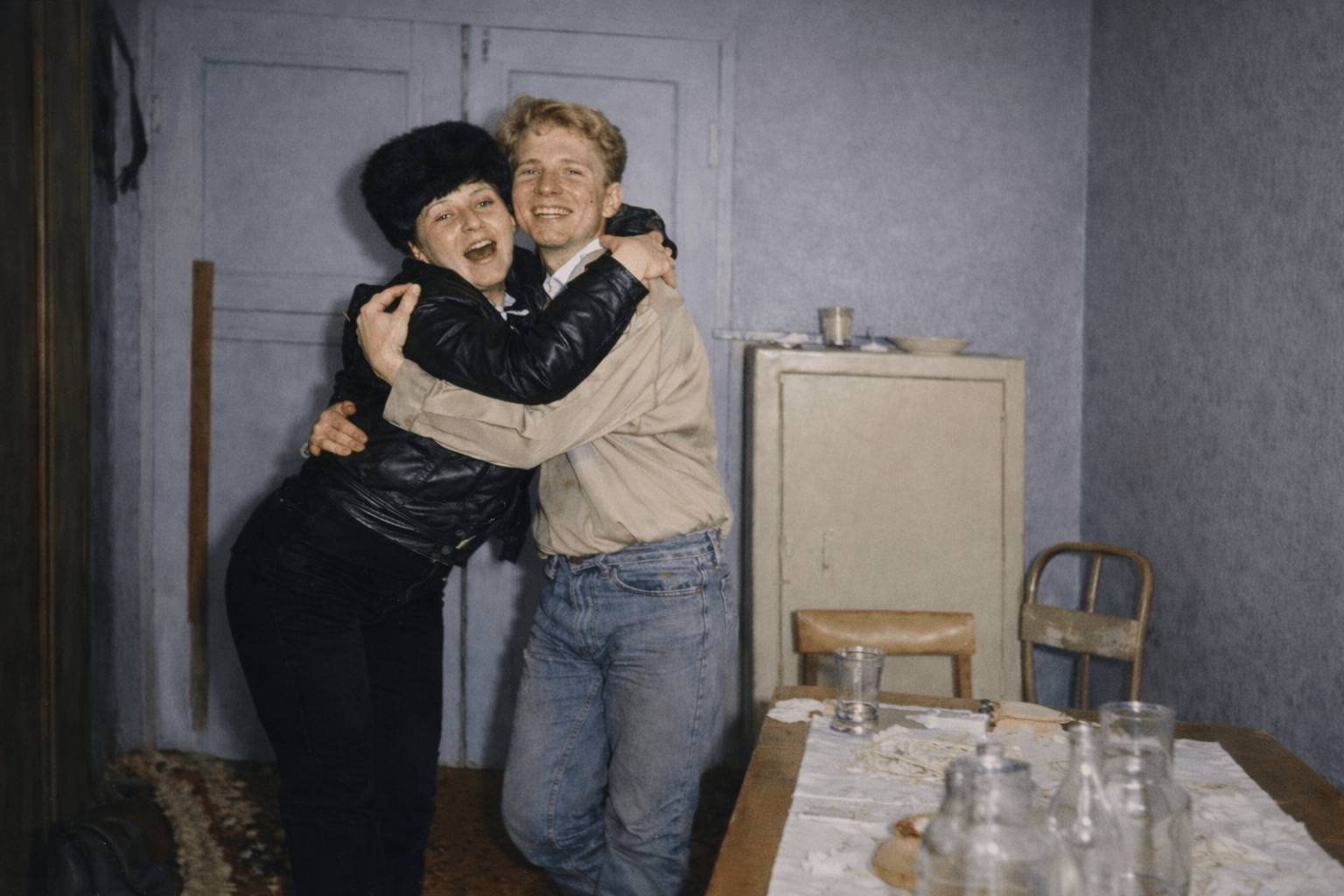
And just like in this photo, Alena Voytovich and I, both seventeen, holding on to each other like the world itself was still figuring out what to do with us. Generation X kids learning who we were in real time.
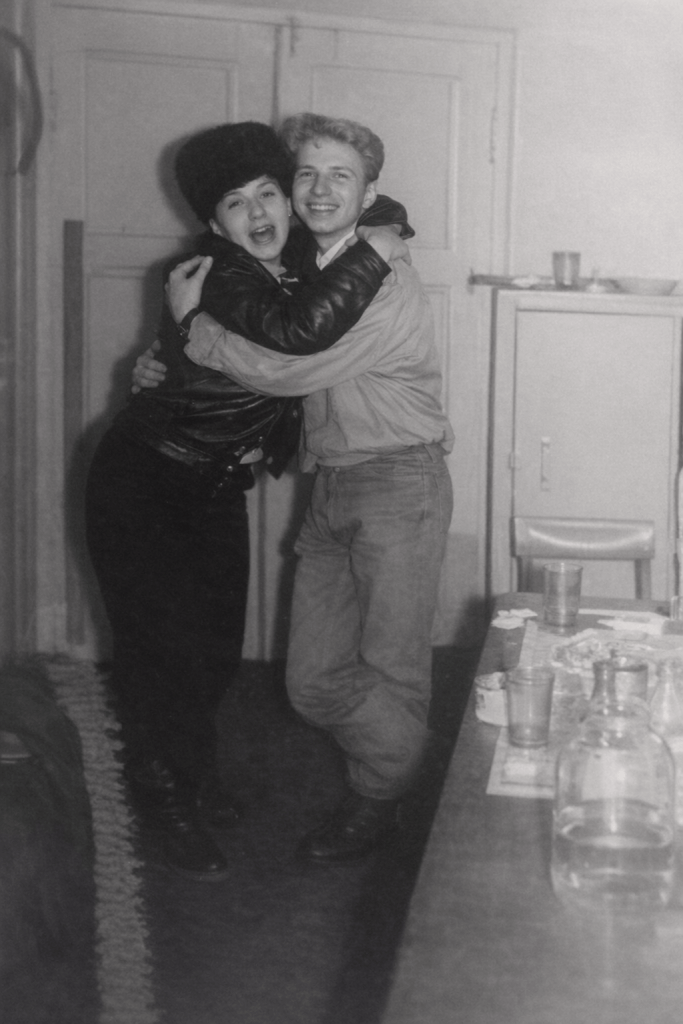
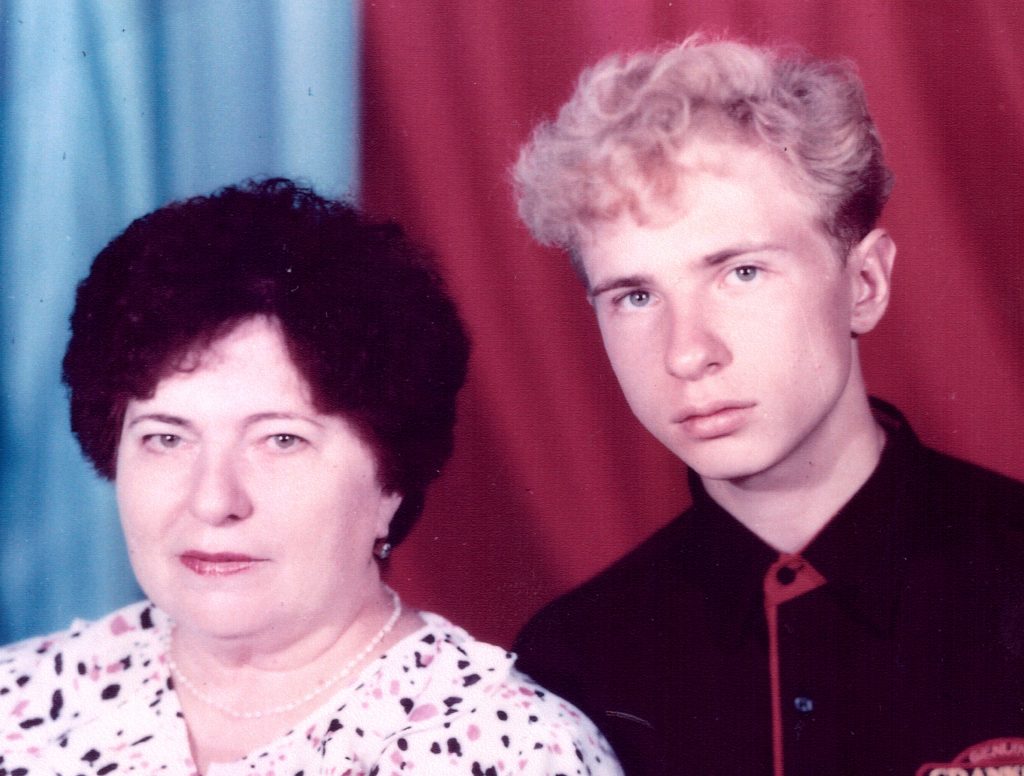
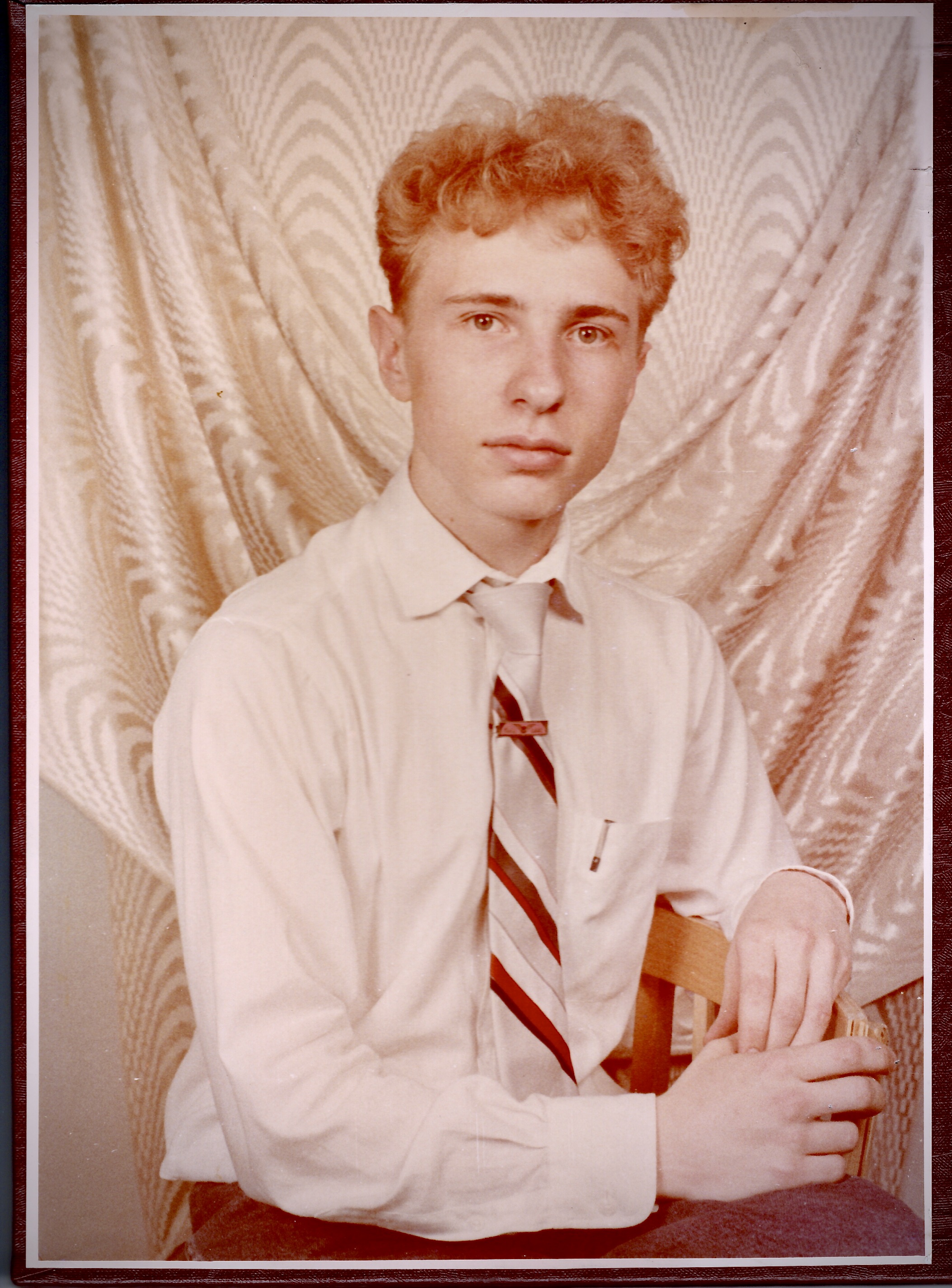
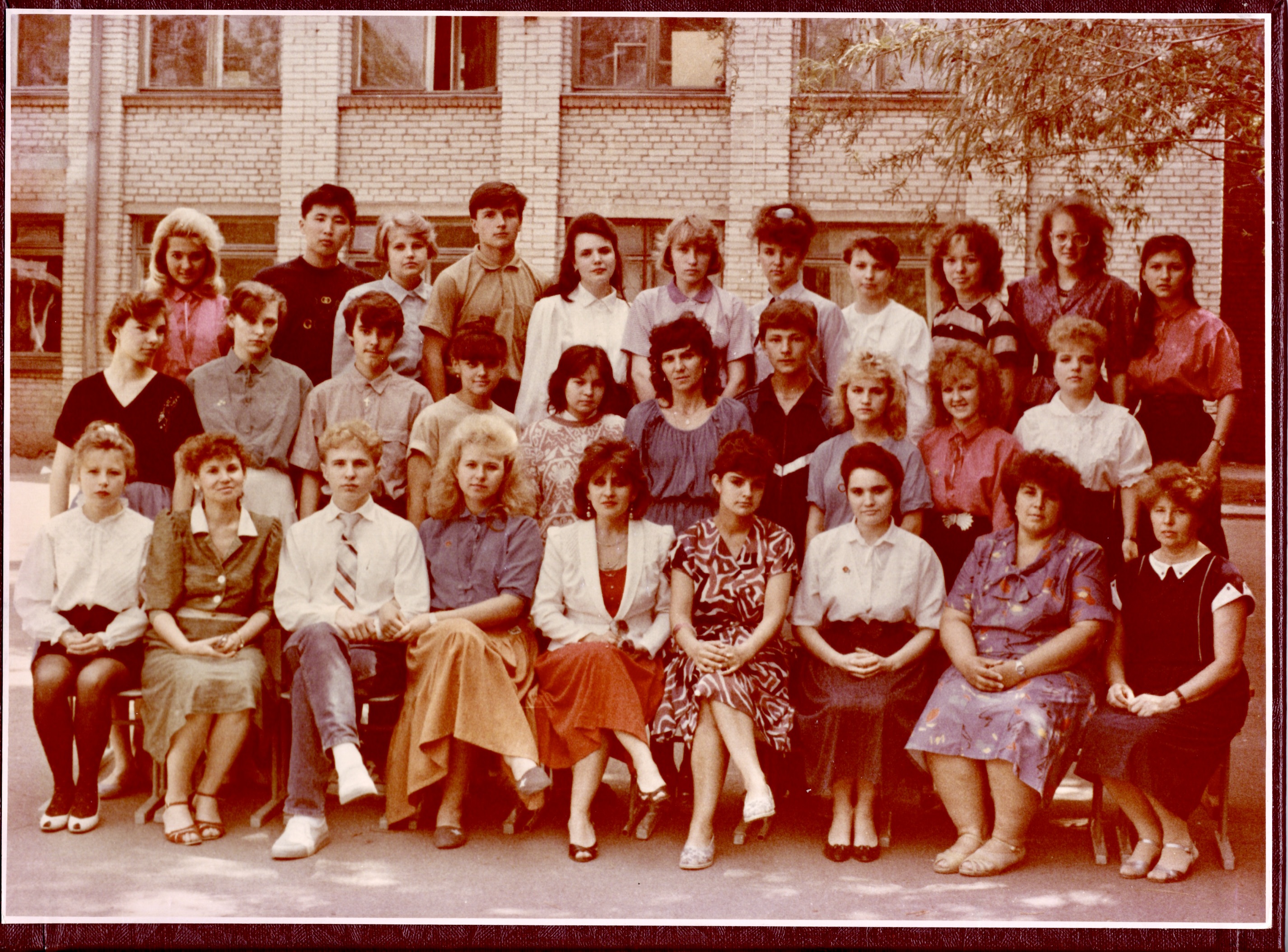
When I shared this reflection with Alenka, she wrote back almost immediately. Her message came in Russian, full of the same memories and laughter that shaped those years. What follows is an English translation of her words.
“Misha, this is amazing. I read it and it felt like I was suddenly back in those unforgettable years again. And by the way, that song has always been my favorite.
Those days were bright for us. I remember our graduation, how we watched the sunrise on the banks of the Kitoy River, how we were not afraid of anything. Our teachers even cried because of our class. We were troublemakers, sure, but we had big hearts. People envied our friendship and how well we understood each other. Some teachers even joked that we should get married. Back then you and I were inseparable ‘gang.’
I sometimes run into Albina Anatolievna, our class teacher. She always asks about you. She says she knew even then that we would stay friends for life, and that even in school we were already a ‘gang.’
I remember how your mom used to make us the most delicious blini and never scolded us, even when we showed up at home near sunrise. And the gift you gave me is still hanging in my mom’s house, a small chandelier. It’s my little memory of you and of your mom.
There were so many funny moments. Hiding in Igor’s storage room with alcohol. Swimming across the Kitoy River when one crazy girl tried to compete with me just to get your attention and nearly drowned. Meanwhile you were on the bank worrying about both of us. We had to sit on the side of the river for almost forty minutes while Tanya caught her breath. She picked the wrong person to compete with. I already had a swimming rank and knew that river like the back of my hand.
And remember how we drank wine sitting at the piano while mom was at work? The piano basically became our coffee table.
But the main thing is we always had fun. Nobody was picking fights or trying to prove something. We just enjoyed life.
We grew up in the tough 90s, but we grew up to be real people. And not bad ones either. We studied, we worked, and we didn’t complain. Sometimes when I look at young people today it feels like everything is wrong for them, nothing is good enough. I think they would learn a lot if they had to live through our time. We learned how to live and how to survive.
I truly value our friendship. I never even go to class reunions anymore. What’s the point? You’re not there. Lena isn’t there. My real friends aren’t there.”
The older I get, the more I understand something simple. Identity is not built by choosing one world over another. It is built by learning to carry both.
Somewhere inside many of us there is a small, invisible city that no longer exists on any map.
Yet we continue to live there.
 Mikhail Oparin