
Some works don’t end when a class does or when a semester closes. They stay with you, quietly accumulating meaning as time passes. La Gioconda Visiting Her Old Friend Leonardo is one of those works for me.
I created it in May of 2010 while I was an undergraduate student at Washington State University Vancouver. What began as a course assignment quickly turned into something more deliberate, shaped by questions of authorship, proximity, and how we relate to images that history has elevated beyond reach.
The question that guided the work was simple: what would it look like if the Mona Lisa were no longer confined to her frame?
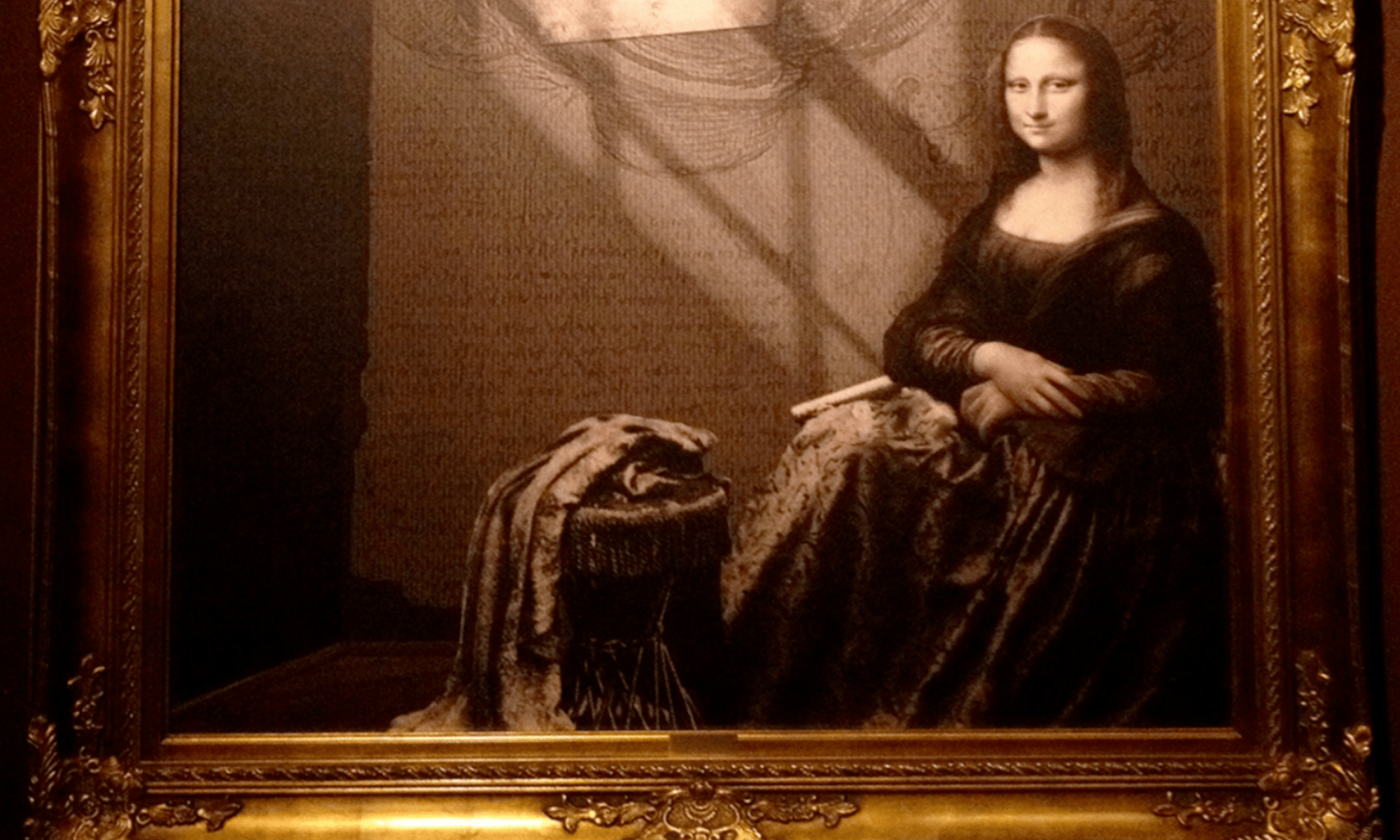
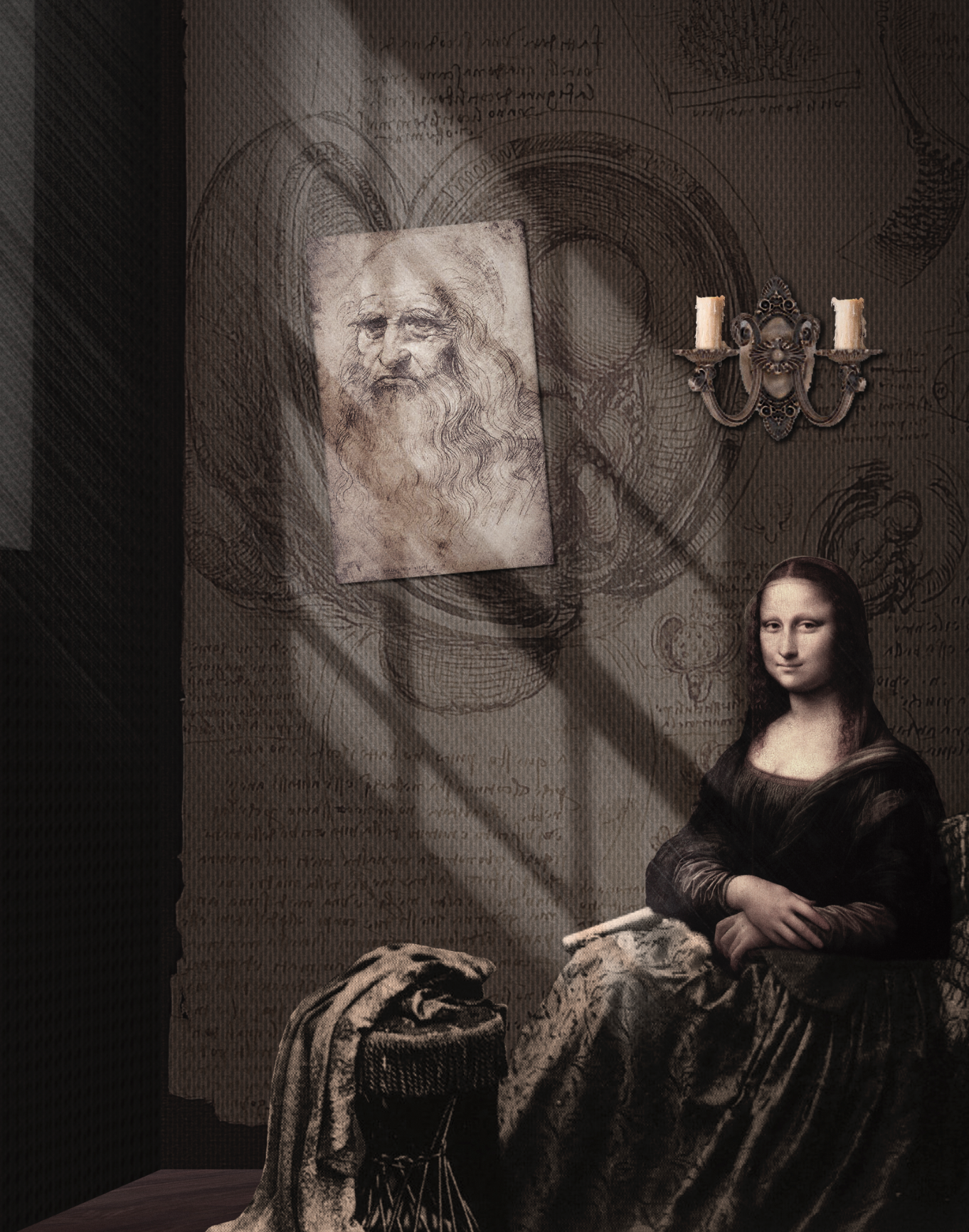
Instead of presenting her as an object of display, I imagined her as a visitor. She steps into a room. She is present in full form. She is not performing, posing, or being observed. She is arriving.
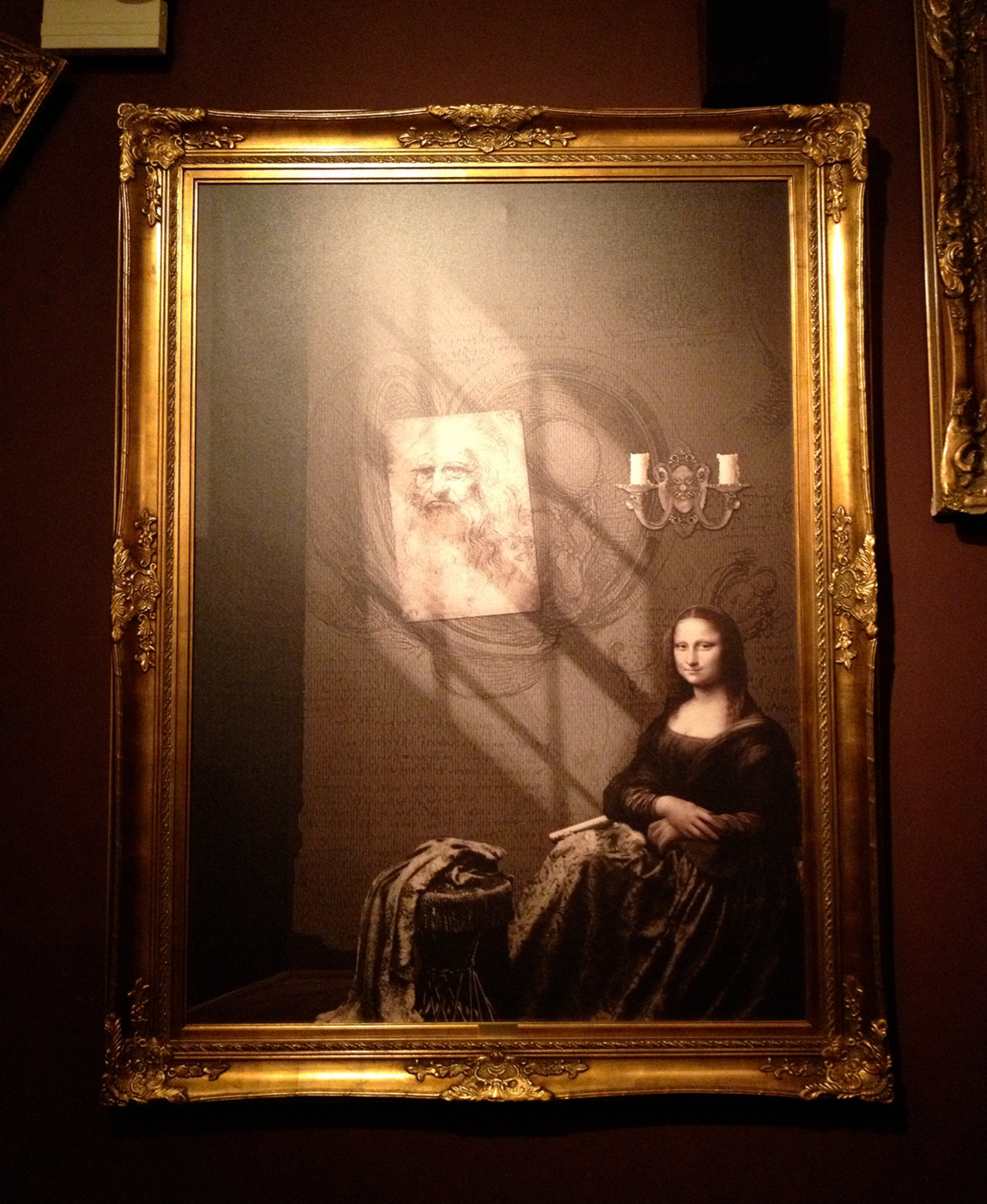
The interior space surrounding her is entirely authored. The walls, floor, and spatial depth were constructed digitally using layered shapes, strokes, and tonal adjustments in Photoshop and Illustrator. I wanted the room to feel modern, restrained, and contemplative. Not a museum. Not a church. A place where time could slow down.
A beam of light enters the room from a window that remains outside the frame, invisible to the viewer. That light represents enlightenment and curiosity. It does not fall on Mona Lisa herself. Instead, it illuminates Leonardo’s presumed self-portrait hanging on the wall behind her. That decision was intentional. Leonardo’s presence is acknowledged, but it is not dominant. He watches quietly.
The surrounding walls are layered with fragments of Leonardo’s earlier studies, including anatomical drawings of the womb. These images speak to origin, birth, and the physical foundations of life. They form a visual environment that surrounds Mona Lisa’s figure without enclosing her, suggesting that her existence is inseparable from Leonardo’s inquiry into humanity itself.
The work also incorporates a carefully selected fragment from Fading Away (1858), a photomontage by British pictorialist photographer Henry Peach Robinson. That element was chosen for its emotional weight and its engagement with stillness and mortality. Like the other historical fragments, it was manipulated and recontextualized to serve the composition rather than reference its original narrative.
The title came naturally. In my mind, she wasn’t confronting Leonardo. She wasn’t posing for him. She was visiting an old friend. There was tenderness in that idea. Mutual recognition without hierarchy.
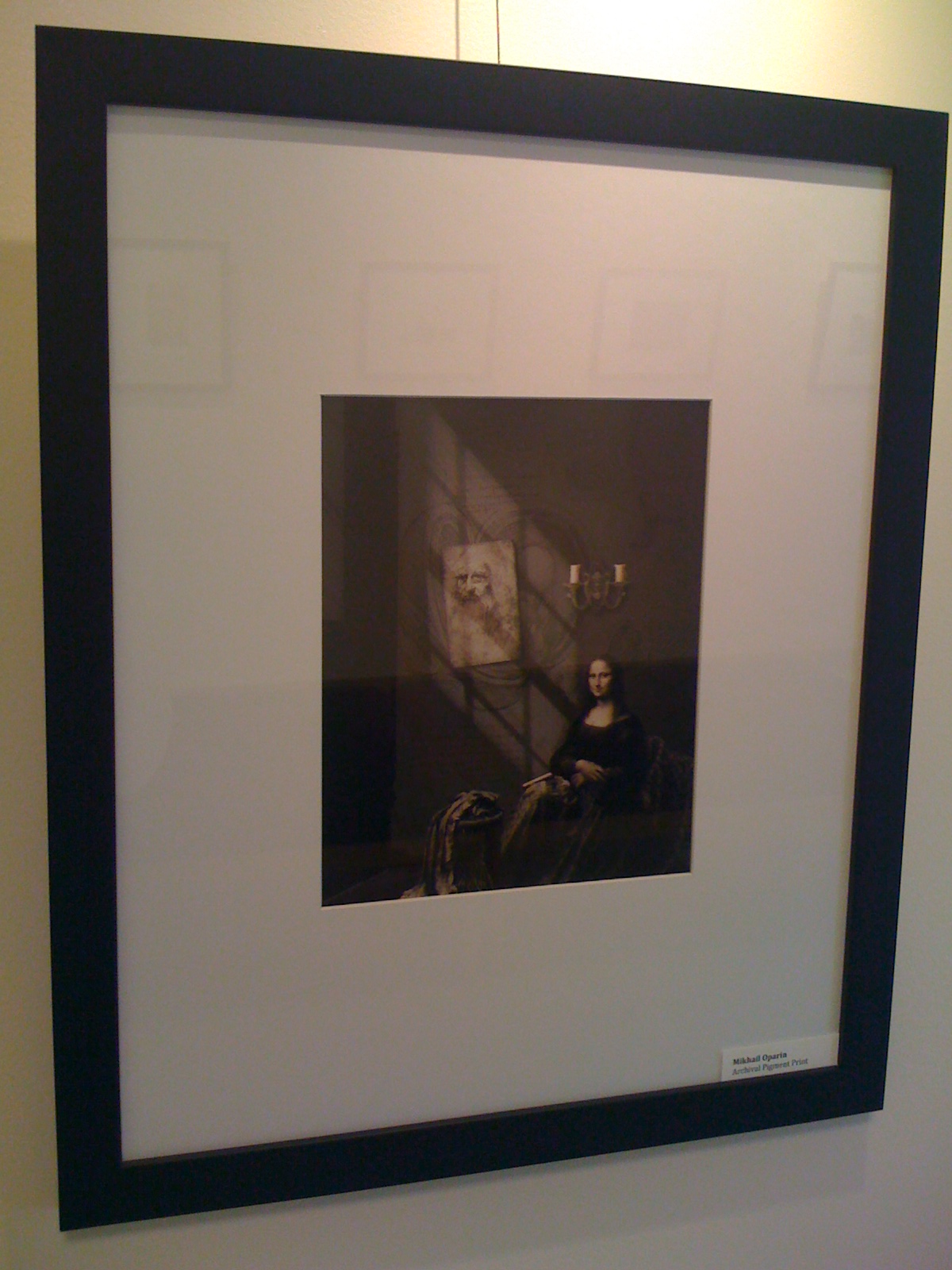
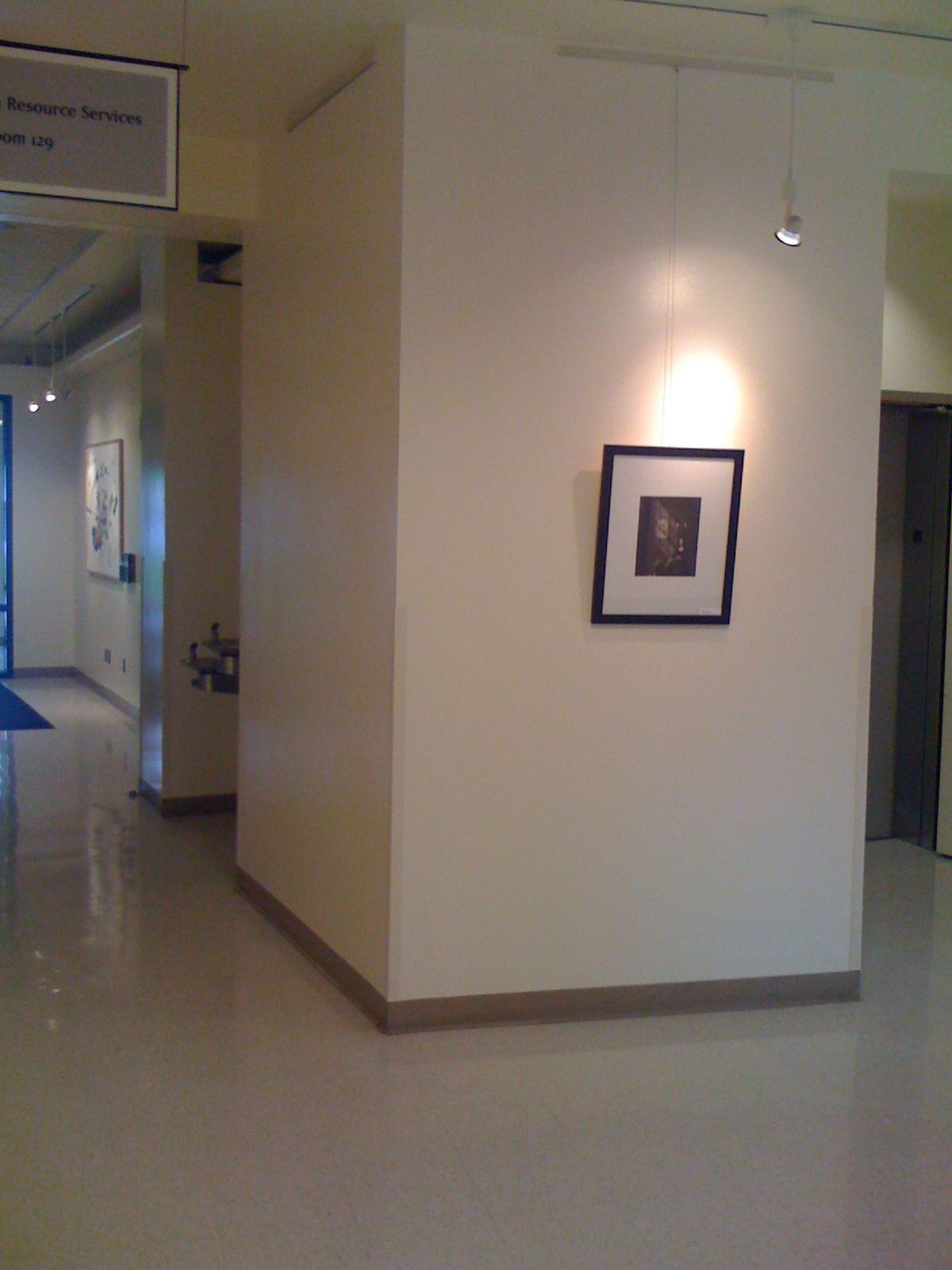
Over time, the work took on a life beyond its academic origin. A large-scale reproduction was produced in 2013, allowing the composition to exist at a scale it was always meant to inhabit. It was exhibited at the WSU Vancouver Student Gallery, sold as a 21.75 × 27.75 inch canvas print to a private collector in Virginia for approximately $130, and later installed as a large framed print at Jordan Springs in Stephenson, Virginia.
Years later, I formally registered the work with the U.S. Copyright Office. That process required a precise articulation of authorship: what was borrowed, what was transformed, and what was created anew. It reinforced something I understood intuitively when I first made the piece. This was not appropriation for novelty. It was selection, arrangement, spatial construction, and intent.
Looking back now, more than a decade later, I see this work as an early articulation of concerns that still shape my practice. Space matters. Context matters. Restraint matters. And sometimes the most meaningful gestures are the quiet ones.
La Gioconda Visiting Her Old Friend Leonardo
Original digital collage
Artist: Mikhail T. Oparin
Year: 2010
Original composition: 42 × 76 inches
Large reproduction produced: 2013
Work Description
La Gioconda Visiting Her Old Friend Leonardo is a digitally constructed interior scene that repositions historical imagery within a contemporary spatial narrative. Mona Lisa appears not as a framed artifact, but as a full, present figure standing within a room shaped by architecture, light, and memory.
A beam of light enters the space from an unseen window, directing attention inward and illuminating Leonardo’s presumed self-portrait. Surrounding architectural surfaces are layered with fragments of Leonardo’s anatomical studies, forming a visual environment that speaks to origin, creation, and continuity.
Artist Statement
This work is about presence and lineage.
I wanted to imagine Mona Lisa outside of spectacle, allowed to exist without being displayed. She stands quietly, whole and grounded, within a space shaped by inquiry rather than reverence.
Leonardo is present, but not central. His influence is acknowledged through light, memory, and fragment rather than dominance. The room becomes a place where creator and creation coexist without hierarchy.
Process & Transformation
The work combines original digital construction with selected public-domain imagery. All sourced elements were substantially manipulated, re-scaled, layered, and recontextualized within an original spatial composition authored by the artist.
Provenance
- Created in May 2010 at Washington State University Vancouver
- Exhibited at the WSU Vancouver Student Gallery
- Large-scale reproduction produced in 2013
- Sold as a 21.75 × 27.75 inch canvas print to a private collector in Virginia (approx. $130 USD)
- Installed as a large framed print at Jordan Springs, Stephenson, Virginia
Copyright & Authorship
This artwork is formally registered with the U.S. Copyright Office.
Authorship is claimed for the original selection, arrangement, manipulation, and spatial composition of all elements. Public-domain source imagery is acknowledged and was used lawfully as material within a new, original work.
Artist Valuation
Artist Valuation (2026):
$1,200 – $1,800 USD
This valuation reflects the work’s documented history, exhibition record, copyright registration, and its significance as an early, fully realized example of the artist’s practice.
Shop the Mona Lisa Series →
 Mikhail Oparin