

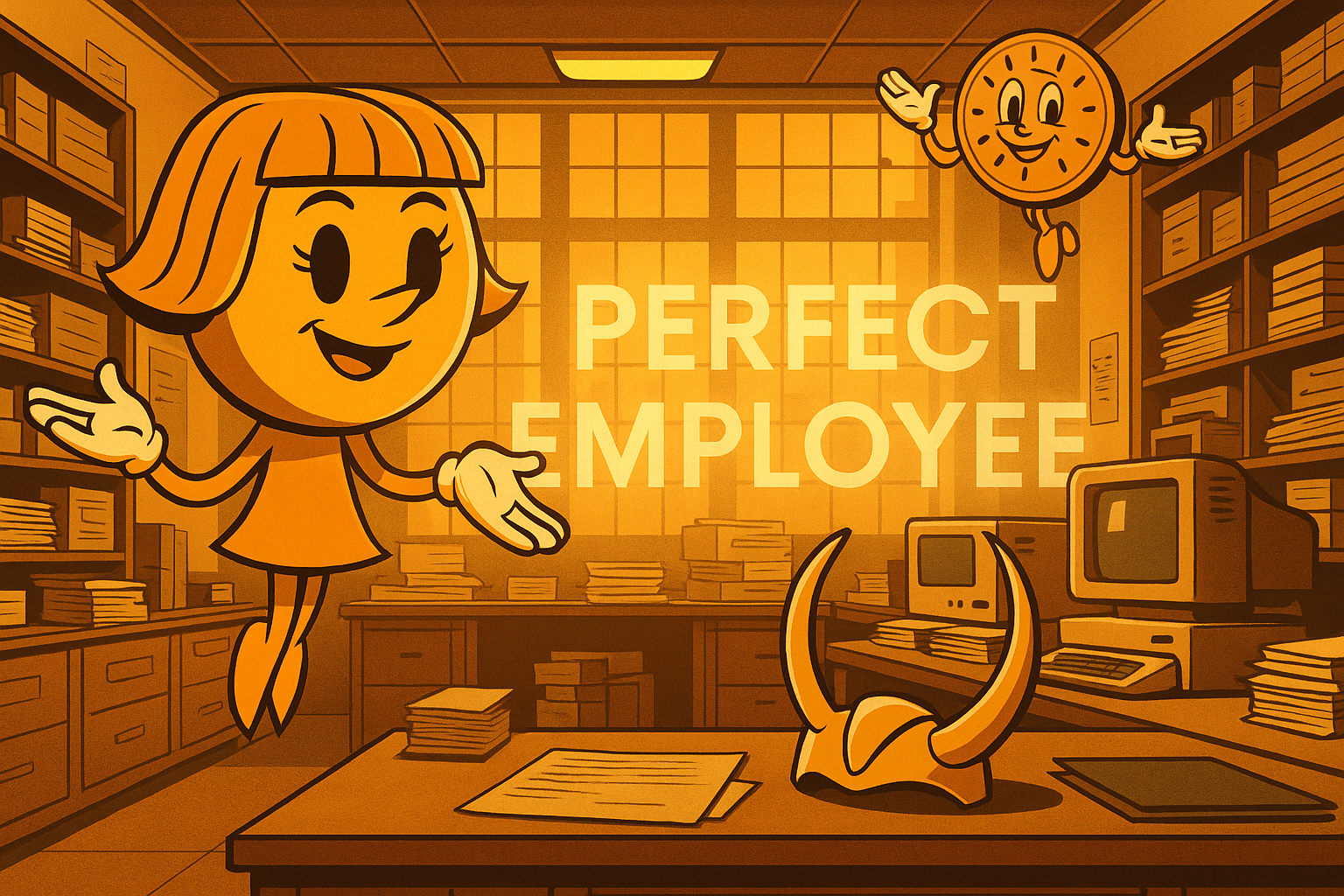
The Myth of the Perfect Employee
Equity is a word we often see at the top of mission statements in our school districts. It looks great in banners, policy drafts, and social media posts. But what happens when those same institutions quietly favor candidates who are flawless on paper, leaving out those with non-traditional paths, lived experience, or community roots?
I know this well, both from my first 14 years at ESD 112 and in the years since, building communication strategies, publishing projects, and equity initiatives. This article isn’t just a critique. It’s a call to widen our lens: to see that true excellence in education and communication comes not from “perfect employees,” but from inclusive communities that lift up diverse talent.
I may agree that form follows function. But what’s the function of a “perfect haircut”? And where does that leave someone who is bald? Communities aren’t design projects. People don’t need to be polished into neat, tidy forms to be valuable. Equity means seeing worth in every story, even when it doesn’t fit the mold. The original idea of “form follows function” was about simplicity and practicality. But in hiring and creative culture, it’s often twisted to mean only the most polished forms are worthy. That’s not equity, that’s elitism dressed up as design.
How Elitism Shows Up in Hiring
- Vague Ideal Language – Terms like perfect, exceptional, or many years managing district communications can unintentionally exclude people with authentic community experience or creative problem-solving skills.
- Repeated Rejections Without Feedback – When applications are denied multiple times without clarity, candidates are left guessing how to improve.
- Favoring Familiarity & Credentials – Hiring practices sometimes favor insiders or those who reflect the personal preferences of gatekeepers rather than broadening opportunity.
These patterns aren’t unique to ESD 112, research and local reports show they appear across education, nonprofits, and creative industries. Nonprofits often emphasize elite credentials in job postings at the expense of lived experience (Ongig, 2019). In higher education, faculty hiring is shaped by prestige networks, with top programs disproportionately hiring from other elite schools (Freeman & DiRamio, 2016). Even in Washington State, districts like Bellingham Public Schools have begun tracking diversity and bias in hiring to confront inequities in staff composition (Bellingham Public Schools, 2025).
👉 Have you seen examples of this tension between equity and elitism in your own school, district, or workplace? I invite you to share your stories in the comments below, your experiences can help expand this conversation and spark change.
Local Examples of Inclusive Hiring
ESD-U Teacher Certification Program: Since 2018, ESD 112 has operated the ESD-U program, an alternative route to teacher certification. Nearly 100 educators have gained credentials in areas like special education and English language learning, many from non-traditional or community-based backgrounds. This is an example of equity in practice, giving local people the opportunity to grow into professional roles (ESD 112, 2022).
Ruby Bridges Elementary Inclusion Model: Ruby Bridges Elementary in Northshore School District was selected as a demonstration site for Washington’s Inclusionary Practices Project. The school models inclusive teaching by integrating students with disabilities into general classrooms and fostering professional risk-taking among staff (Northshore School District, 2020).
Statewide Inclusion Data: According to OSPI, as of 2024, 65.1% of Washington students with disabilities spend 80–100% of their day in general education classrooms, a marked increase driven by intentional policy shifts and inclusive practices (OSPI, 2024).
👉 What about your experience? Have you seen real-life examples of inclusive hiring in our local schools, districts, or agencies? I’d love to hear your perspective in the comments, your examples will help bring this conversation closer to home.
Lessons From My Own Work
Embrace the Spectrum: A campaign strategy I co-created for Evergreen Public Schools, providing communication templates, awareness calendars, and inclusive messaging for LGBTQ+ visibility. This project showed how grassroots collaboration can advance equity even without a “perfect” corporate toolkit.
Always With Hope: Working on my mothers memoir taught me that authenticity is what resonates with your audience. A heartfelt, lived story, even if imperfect, speaks to people far more than the kind of overly polished ‘bad ass’ perfection often prized in professional communication circles.
What Real Equity in Hiring Looks Like
- Transparent criteria that distinguish between required, preferred, and nice-to-have skills.
- Portfolios and community work valued as much as elite credentials.
- Structured feedback loops that help candidates grow, not just walk away discouraged.
- Mentorship and grow-your-own pathways for local staff and community members.
- Courage to hire people who bring difference, not just sameness.
A Call to Our Community
When we cling to the myth of the perfect employee, we shrink our communities. We lose voices, stories, and fresh perspectives. True equity doesn’t fear imperfection, it embraces it.
Our schools and service districts, have the opportunity to model genuine inclusion in hiring. That means investing in people who may not look perfect on paper but who bring resilience, creativity, and authentic connections to the communities we serve.
Equity isn’t about branding. It’s about practice. Let’s hold our institutions accountable, and invite them to be braver about who they allow through the door.

References
Bellingham Public Schools. (2025). Affirmative action report states that the district will prioritize retaining staff of color at our most highly impacted schools when reducing certified staff, race-based. Parents Defending Education. https://defendinged.org/incidents/bellingham-public-schools-affirmative-action-report-states-that-the-district-will-prioritize-retaining-staff-of-color-at-our-most-highly-impacted-schools-when-reducing-certified-staff-race-base/
Freeman, S., Jr., & DiRamio, D. (2016). Elitism or pragmatism? Faculty hiring at top graduate programs in higher education administration. Journal of the Professoriate, 8(2), 1–28. https://www.researchgate.net/publication/317873396_Elitism_or_Pragmatism_Faculty_Hiring_at_Top_Graduate_Programs_in_Higher_Education_Administration
Ongig. (2019, March 11). Elitism in job descriptions: Who needs Harvard? Ongig Blog. https://blog.ongig.com/diversity-and-inclusion/elitism-in-job-descriptions/Educational Service District 112. (2022, September 28). ESD-U works toward greater educator workforce diversification in Washington. ESD 112. https://www.esd112.org/news/esd-u-works-toward-greater-educator-workforce-diversification-in-wa/
Northshore School District. (2020, December 3). Ruby Bridges Elementary leading the way as model site for inclusionary practices. Northshore School District. https://www.nsd.org/n/~board/district-news/post/ruby-bridges-elementary-leading-the-way-model-site-for-inclusionary-practices
Office of Superintendent of Public Instruction. (2024, March 25). Washington students with disabilities are spending more time learning alongside their peers, data show. OSPI. https://ospi.k12.wa.us/about-ospi/news-center/news-releases/washington-students-disabilities-are-spending-more-time-learning-alongside-their-peers-data-show
 Mikhail Oparin