

I want to start with something small, because that’s how this experience actually unfolded.
Over the past few years, I tried to show up in my local public school system in ways that felt useful. Sometimes that meant volunteering. Sometimes it meant offering professional skills. Sometimes it simply meant asking questions and paying attention to how they were received.
I came into this as a Russian-American gay parent raising a child in a multicultural family. I also came with a background in communication and a long-standing commitment to diversity, equity, and inclusion. I did not come in assuming I had all the answers. I came in believing there was room to listen, collaborate, and build something better together.
Before you decide what you think about this, I ask only that you keep reading. Not because I need agreement, but because the pattern matters.
The Welcome That Wasn’t
What I hoped to contribute went beyond helping with events or designing flyers. I wanted to offer perspective. The kind that comes from standing at more than one margin at once, and from working professionally with messaging, systems, and public trust.
That mattered to me because schools don’t just educate students. They signal belonging. They tell families, often indirectly, whether they are seen, understood, and valued. I wanted to help strengthen those signals, especially for families who rarely feel centered.
Instead, what I experienced felt like exclusion coming from opposite directions at the same time. On one side, progressive language without follow-through. On the other, traditional resistance to anything that disrupted familiar norms. Rarely did anyone say “no” directly. The message arrived through pauses, deflections, and quiet redirections.
It took time for me to admit that to myself.
Behind the Curtain of Affinity Groups
My first experience with district-level parent leadership came through Affinity Groups. I entered that space with genuine optimism. The stated goal was to bring together families who shared cultural or linguistic backgrounds and to create stronger pathways for representation and engagement.
In my case, that meant participating in the Slavic Affinity Group alongside other Russian-speaking parents and the district’s Russian parent liaison.
Some moments were productive. Others were uncomfortable in ways I didn’t expect.
Conversations that were meant to focus on equity sometimes drifted into personal belief systems, without much structure to guide them back. I remember sitting in those meetings thinking, Is this really where this is going? and wondering who, exactly, was being centered in the room.
One moment that stayed with me involved recommendations for Russian-language literature in school libraries. I advocated for a range of classic and contemporary authors familiar to Russian-speaking students: poetry, fiction, and drama that reflected linguistic and cultural depth. Another participant insisted that Christian faith-based books should be included as representative of “Russian culture.”
I strongly disagreed.
Religion can be part of identity, but it is not the whole of it. Framing Christianity as the cultural standard for Russian speakers in a public school context would erase secular families, as well as Muslim, Jewish, and atheist Russian-speaking communities. That disagreement was tense. It also revealed something larger.
Without clear structures for shared leadership, Affinity Groups can end up reflecting the biases of whoever is most comfortable speaking. What is intended as inclusion can quietly reproduce exclusion in a different form.
Over time, these spaces began to feel less like pathways and more like holding areas. Families were invited to share, but rarely empowered to shape outcomes. Ideas surfaced, then stalled. I began to wonder whether participation was meant to influence decisions or simply demonstrate that outreach had occurred.
As a gay parent, I felt that distance even more sharply. In those rooms, I was unrepresented and, at times, unmistakably othered.
PTA Involvement and Cultural Disconnect
At the school level, I tried to engage through the PTA. I joined the nominating committee, volunteered my time and efforts. I proposed ways to strengthen communication and equity by offering help with outreach, messaging, and inclusive engagement strategies. I even suggested creating a leadership role focused on diversity engagement.
The response was polite. It was also consistently deflective.
I was told my ideas overlapped with existing roles, even when those gaps were obvious. When I later expressed interest in a communication-related position, I was told someone had already been selected and that I should first demonstrate commitment by volunteering at events. At that point, I had already been attending meetings and volunteering for months.
No one was unkind. No one raised their voice. But leadership circulated within familiar circles, and new voices were redirected quietly within the small exclusive group.
These groups are often shaped by tightly connected networks, mostly white and mostly mothers, who pass leadership informally among themselves. That may not be intentional, but it has consequences. It creates a culture where certain ways of speaking, belonging, and leading are treated as default.
I knew I didn’t fit that mold.
Missed Opportunities for School Leadership
A conflict involving my son brought these patterns into sharper focus.
After he used a word that an administrator interpreted as racially offensive, assumptions were made quickly and a referral was suggested. I stepped in to defend him, emphasizing the need for context, consistency, and better training around language and behavior.
What made this especially difficult was the contrast. This same child had previously been called “gay” and mocked for having two dads. Those incidents received no formal response.
I wrote to the principal not only to address the immediate situation, but to raise broader concerns about implicit bias and uneven accountability. I offered concrete suggestions, including the use of GLSEN’s Ready, Set, Respect curriculum, and pointed out missed opportunities to acknowledge events like Women’s History Month or International Women’s Day.
The reply I received was calm and courteous. It was also surface-level.
I remember rereading it and realizing that none of my questions had actually been answered. There was no engagement with the systemic concerns I raised. No commitment to follow-up. The tone was respectful, but the message was clear: the conversation would not move any further.
Tensions Within Equity Advisory Work
Even within the district’s Equity Advisory Committee, hard conversations emerged.
While co-leading work on Russian-language literature recommendations, I again opposed the inclusion of Christian religious texts as representative of Russian culture. My position was simple: Russian-speaking identity is diverse, and public schools should not elevate one faith tradition as culturally definitive.
The disagreement was uncomfortable. I stood firm.
True equity requires making space for complexity, not allowing one identity to dominate the narrative. Since then, I’ve seen growth in how some colleagues approach these questions, and that still gives me hope. Growth doesn’t always happen in the moment. Sometimes it follows tension.
A Pattern of Closed Doors
Over time, a pattern became hard to ignore.
Each time I offered skills, ideas, or labor, the response was encouraging but distant. I was told my experience was valuable. I was thanked for my engagement. And yet, meaningful opportunities never materialized.
The language was always polite. “That’s a great idea, but not now.” “We already have someone in that role.” “We’re moving in a different direction.” The result was always the same: participation at the surface, exclusion from influence.
This is what staying at the margins can look like. Being seen as capable, but never fully trusted. Welcomed in theory, kept at arm’s length in practice.
Why I Haven’t Walked Away
Despite all of this, I remain engaged.
I stay because I know other families are watching quietly, wondering whether there is space for them too. I stay because persistence matters, especially when inclusion feels conditional.
I also stay because I’ve seen glimpses of what genuine equity leadership can look like. I’ve worked with individuals in the district who listen openly, reflect honestly, and act with intention. Those moments are rare, but they matter.
Inclusion is not about warm language or welcoming flyers. It requires listening without defensiveness. It requires transparent leadership pathways. It requires discomfort, reflection, and follow-through.
If someone with professional expertise, time, and language access can still feel shut out, imagine what that means for families with fewer resources or less confidence navigating these systems.
Inclusion cannot be a slogan. It has to be practiced, daily.
I’m still here. Still showing up. Still believing schools can do better. And still committed to staying engaged until they do.
Epilogue: Identity, Solidarity, and the Work Ahead
I write this as a Russian-speaking parent, aware that the word “Russian” carries heavy associations today, especially for Ukrainian and other Slavic families affected by violence and displacement. I want to be clear: I stand with those families. I honor their histories and voices.
My identity is one part of a broader cultural mosaic. Equity means ensuring no story in that mosaic is erased or flattened.
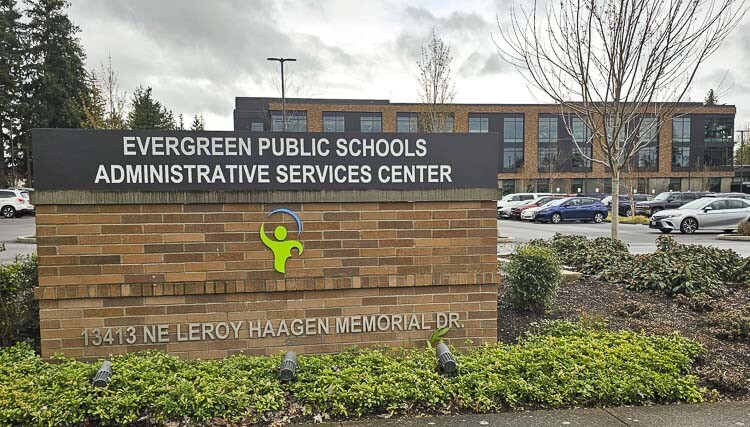
Equity is also not the only challenge schools face. Recently, Evergreen Public Schools experienced a strike by classified staff advocating for fair wages and safer working conditions. It was the first strike in the district’s history, and it underscored how deeply school culture is shaped by how we treat the people who maintain it.
Years ago, I raised concerns about basic conditions at my son’s elementary school: neglected grounds, waste left after meals, signs of disinvestment. These details may seem small, but they leave lasting impressions on children.
Most of us care for our homes. We clean, repair, and maintain them because they matter to us. When school campuses appear neglected, they communicate something different.
I support staff advocating for livable wages and respect. I also believe equity must include accountability and care for shared spaces. Clean, cared-for schools reflect dignity. Neglect reflects disregard.
Equity cannot live only in statements and assemblies. It must show up in how we treat staff, how we care for environments, how we respond to families, and how seriously we take voices that challenge comfort.
The work on inclusion and equity matters and it is not finished.
Photo by Paul Valencia, Clark County Today.
 Mikhail Oparin